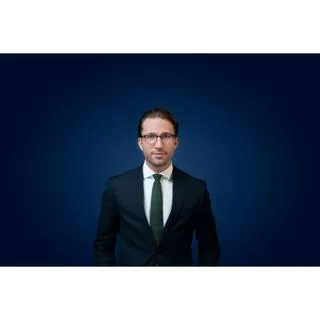
“Conducting arbitration-related court proceedings in English will make Switzerland a more attractive arbitration hub”
Publicado el 10 mar 2023

LEADERS LEAGUE: Tavernier Tschanz will be merging with Niederer Kraft Frey to reinforce the firm’s presence in Geneva. What are some business objectives of this merger?
Frank Spoorenberg: As a result of this merger, NKF will further extend its leading position in Switzerland’s two economic centers: the Lake Geneva basin and the Greater Zurich area, and thus anchor itself even more strongly in the Swiss legal market. NKF will benefit, in its new configuration, from the experience of 48 partners and 140 lawyers and will employ a total of around 220 employees. In Geneva, NKF will occupy a leading position from the outset, both with its corporate and mergers and acquisitions teams as well as its litigation/arbitration team.
Frank, you have acted as counsel and arbitrator in over 70 arbitration proceedings throughout your career. What are some trends and developments that you are currently seeing in the market and expecting to see in 2023?
Frank Spoorenberg: 2023 is likely to take the same path as 2022 did, where we saw a lot of work generated or impacted by the numerous and repeated sanctions, be they Ukraine or Iran related. Many post-M&A and construction disputes are likely, as those areas are particularly impacted in time of uncertainty.
You are considered a rising star in Switzerland. What are your goals and aspirations when it comes to your domestic arbitration practice?
Anja Vogt: My goal is to successfully represent clients in many more arbitration proceedings under different rules, as well as in subsequent setting-aside and enforcement proceedings. I am very happy that NKF’s dispute resolution, and in particular, its arbitration practice will become even stronger with our Geneva colleagues since NKF will now have offices in Switzerland’s two main arbitration hubs. Personally, I am looking forward to working with very experienced practitioners, including Frank.
As a young professional in the field of dispute resolution, how can the Swiss market evolve to stay competitive and attractive?
Anja Vogt: In my view, Switzerland is attractive because the country is very reliable, its political system is a guarantor of stability and it has a straightforward and attractive legal framework, not only, but especially, when it comes to arbitration law. Thus, Switzerland will remain attractive if these factors are maintained.
After the merger with Tavernier Tschanz, NKF will benefit from the experience of 48 partners and 140 lawyers and will employ a total of around 220 employees
Switzerland will soon implement a new law allowing commercial courts to conduct cases in English, canton permitting. How will this impact the Swiss economy and legal landscape?
Frank Spoorenberg: Those are indeed ongoing projects, although referring to them as to be soon-to-be implemented is perhaps a touch optimistic. Be it as it may, those projects are meaningful as they will propose a golden alternative to those who prefer state courts over arbitration but nevertheless look for specialized judges with international exposure. In addition, conducting arbitration-related court proceedings in English, coupled with the power to set aside international arbitral awards before the Swiss Federal Tribunal, will make Switzerland more attractive as an arbitration hub.
Anja Vogt: Conducting court proceedings in English will make it easier for our clients who do not speak one of the official languages of Switzerland. It will also make lawyers’ lives easier. At present we have to prepare submissions in German or French then translate them into English so the client can understand them. This is of course cumbersome and takes up a lot of time. I also agree with Frank that this could be an attractive alternative to arbitration proceedings when it comes to proceedings before the specialized, commercial courts, which are, in my experience, generally highly qualified and business aware.
Some practitioners believe that, in taking this step, we could lose business to foreign competitors, however I do not share this concern.
Conducting proceedings requires not only knowledge of the applicable procedural rules but also of the practice and the mentality of the courts. Even though we have a uniform civil procedure code in Switzerland, how civil proceedings are conducted varies significantly between the different cantons. This applies to the German-speaking cantons but is even more true from a cross-canton perspective e.g. between the German and the French-speaking parts of Switzerland.
Apart from language barriers, this is probably the main reason why for example Zurich-based, German-speaking attorneys do not generally nor directly represent clients before Geneva courts.
How will the Russian invasion of Ukraine and the current energy crisis impact the dispute resolution market in Switzerland and abroad?
Frank Spoorenberg: As I said before, it has already had a huge impact. You need only mention the Russian parties who have been excluded from courts and arbitral tribunals for months. The situation has improved with the new EU regulation, mirrored by the Swiss sanction regime, which now allows claims to be pursued, respectively defended despite the sanctions, and sometimes subject to authorizations. It is no doubt that the sanctions and/or the energy crisis are impacting, and will continue impacting, mid-and long-term projects in numerous sectors and industries and thus generate future disputes.
Anja Vogt: In addition, the current situation and, in particular, the EU and Swiss sanctions regimes also led to a significant rise in administrative proceedings and other related disputes.
We expect to see a lot of work generated or impacted by the numerous and repeated sanctions, be they Ukraine or Iran related
What advice would you give to young professionals who wish to pursue a career similar to yours?
Frank Spoorenberg: First, look objectively at each specific aspect of this career – is it really the life you want to have, in concrete terms? If you are sure it is, you should master your country of origin’s substantive law as you will most likely find the same principles in the laws of other countries with which you will be dealing in your cases. Third, do not forget that you can never be too meticulous in your preparation and analysis.